I’m convinced it’s the kindness of God that allows us to fail.
I’ve been in a season of hard relational spaces — the kind that demand conversations I’d much rather avoid. The kind of space where it’s easy to spiral, to ruminate, and slip into self-doubt and defensiveness. There’s an inherent desire in all of us to be right, to justify ourselves, and to validate how we feel. Yet when I lean into those moments, I’m faced with the discomfort of who I am versus who I think I am. There is nothing like pain to expose our deepest shadows.
A couple of weeks ago, getting in the car, it all came to a head. My plan was to have a good cry and let it all out. But as I began, my tears turned into prayer — and I was surprised by what came forth. I started thanking God. Like, really thanking Him. Thanking Him for the challenges, thanking Him for the failed communication, thanking Him for the disappointments, thanking Him for the deep emotions that rose to the surface — even the ones I like to pretend aren’t there anymore. I didn’t plan to thank Him. I don’t think I even wanted to thank Him, but I’m grateful that “…the Spirit helps us in our weakness. For we do not know what to pray for as we ought, but the Spirit Himself intercedes for us with groanings too deep for words” (Romans 8:26).
As I let go that day and let the Spirit lead that prayer, I realized…without these moments, how would I know who I really am? I think we’d all like to believe we’re healthy and well-rounded people, but the truth about conflict is this: it doesn’t just reveal who they are — it reveals who we are. And when I stop long enough to sit with that reality, I’m quick to see I’m no different than anyone else. I can get off my high horse. I can pause. I can remember that we’re more alike in our weakness than we are in our strengths. And it’s here — right here, in that vulnerability and awareness — that I can finally connect with Grace and Mercy.
Perhaps God’s kindness isn’t in preventing the fall, but in allowing us to stand back up with new eyes. Hard conversations are never easy. They often feel like walking a tightrope with every word. But love requires truth, and truth requires deep honesty, and honesty is a prerequisite for healing. And while confrontation is often harder than retreat and heavy with consequence, it’s lighter in hindsight and often filled with reward.
I’m not sure there’s anything more painful than being trapped between pride and humility. But I also think this fragile part of our humanity is useful. It’s important for me to accept that I don’t get everything right. It’s constructive for my soul to reckon with the fact that I sometimes hurt people. It’s beneficial for me to remember I’m not always the hero. Failure has a way of stripping away the stories I tell myself and showing me what’s really there. And so I’m grateful. I’m thankful for the opportunity to look within.
If the whole point of life is learning how to love, this lesson is vital. Because it’s much easier to extend grace and mercy when I’m in touch with my own deep need for them.
Maybe you’re here right now, too. And if you are, try leaning in this time. I know it’s scary. Fear will tell you that coming face-to-face with your shortcomings might destroy you. Ego will call you crazy for considering the experience of the other. Self-preservation will whisper that you should point the finger. But I dare you to try. Sit in the seat of failure and receive the love of God anyway. Feel the shame of missing the mark and listen to His voice call you by name. Drag the beast of self-loathing who hates the taste of Grace — and smear Mercy all over him.
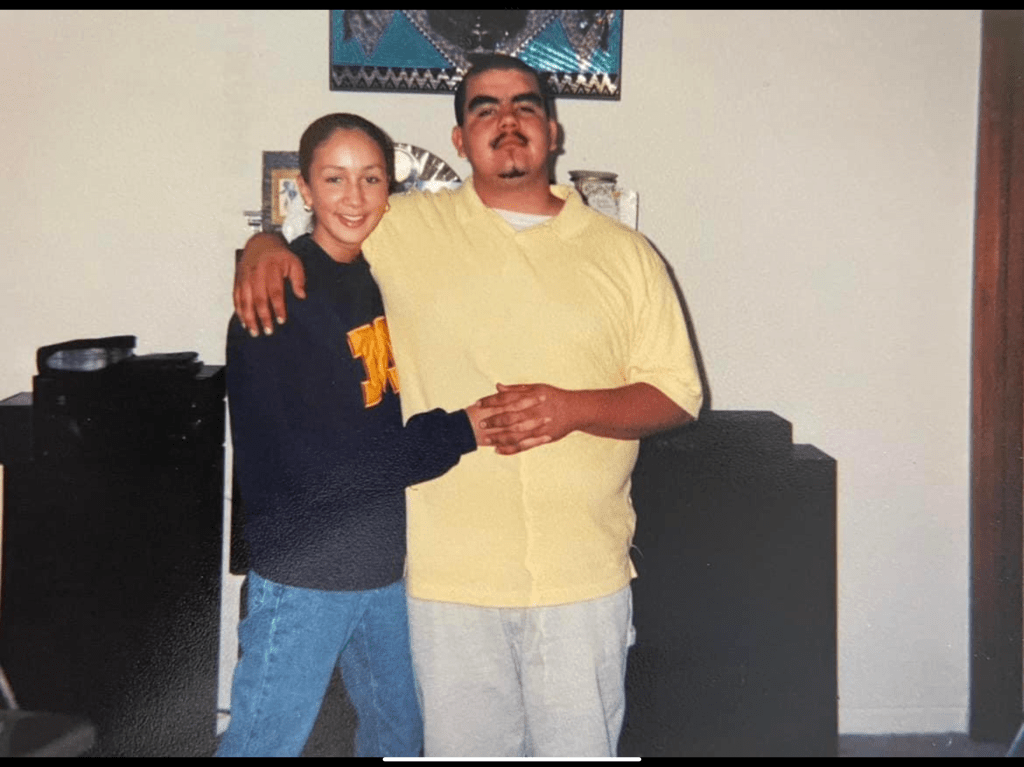
My brother used to always tell me, “Failure is a gift, because it points us to Jesus.” I understand that now. It’s not meant to define us — it’s meant to refine us. Isn’t that something? In Christ, failure never gets the final word. Grace does. Amen.
What if wherever there is conflict, whoever loves the most wins?
Man… what a world that would be.


 Stephanie Jackson